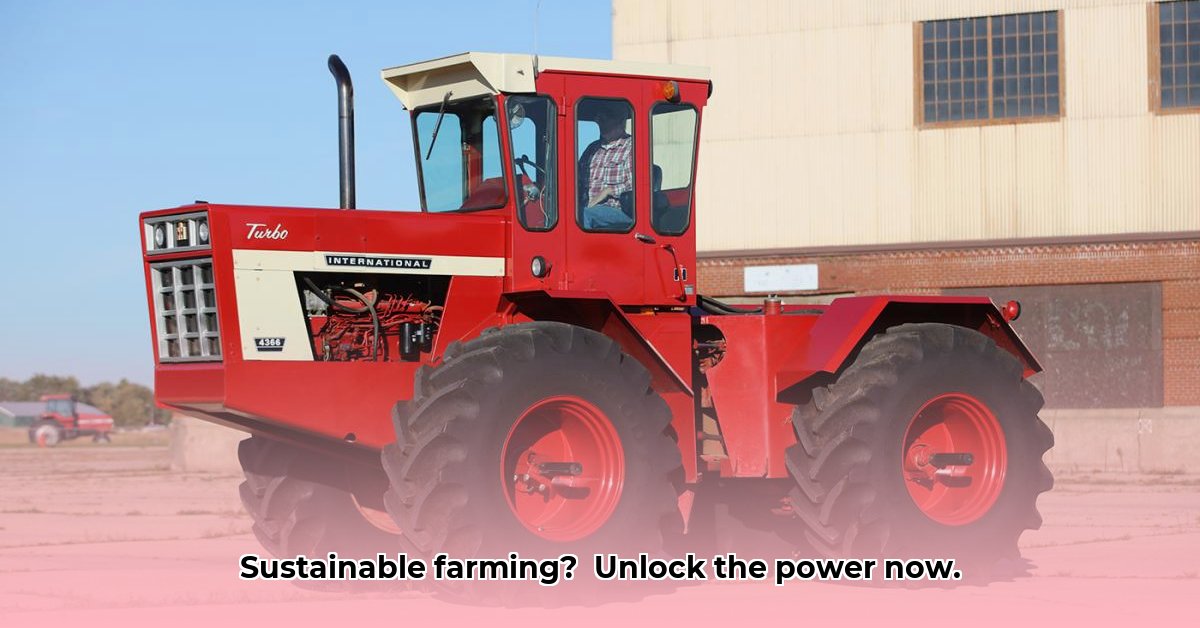
Farming is evolving. Feeding a growing global population demands increased efficiency and, critically, sustainability. Powerful four-wheel-drive (4WD) tractors are at the forefront of this transformation, and Case IH is a key innovator, driving advancements in both productivity and environmental responsibility. For smaller farms, check out these small tractor implements. This article explores the crucial role of Case IH's 4WD tractors in modern sustainable agriculture, examining their technological advancements, the challenges faced, and the collaborative path towards a greener future.
Case IH: A Legacy of Agricultural Innovation
Case IH's history is deeply rooted in agricultural progress. From the steam-powered threshers of the past to the technologically advanced 4WD tractors of today, their journey reflects a continuous commitment to enhancing farming efficiency. This dedication has positioned Case IH as a leader in developing machinery that not only boosts yields but also minimizes environmental impact. Their international reach underscores their global commitment to sustainable agricultural practices.
Technological Advancements in Modern 4WD Tractors
Modern Case IH 4WD tractors are more than just powerful machines; they are precision instruments. GPS-guided planting ensures optimal seed placement, while automated sprayers deliver precisely targeted applications of pesticides, minimizing waste and environmental harm. Sophisticated engine management systems continuously monitor and adjust fuel consumption, maximizing efficiency even on challenging terrains. Isn't it remarkable how technology can make farming smarter and more sustainable? This precision is key to reducing the environmental footprint of large-scale farming. These advancements directly address the need for efficient resource utilization, a cornerstone of sustainable agriculture.
Sustainability: A Holistic Approach
Sustainability in farming isn't solely about fuel efficiency; it encompasses the entire lifecycle of the tractor—from manufacturing to disposal. Case IH acknowledges this, working to create more sustainable supply chains, employing environmentally friendly manufacturing processes, and exploring innovative recycling options for end-of-life equipment. While a completely "zero-impact" solution remains elusive, their proactive commitment represents a significant step towards a more environmentally responsible agricultural future.
Global Challenges and Opportunities: Ensuring Equitable Access
Sustainable farming practices must be accessible to all farmers, regardless of location or scale. Smallholder farmers in developing countries often lack access to modern technology, creating a significant yield and efficiency gap. Addressing this requires a multi-faceted approach, including affordable financing options, accessible training programs, and supportive government policies. Case IH is actively working to develop more affordable and simpler versions of their technologies, aiming to empower smaller farms and promote widespread adoption of sustainable farming techniques. Can we ensure technological equity in agriculture for a truly sustainable world? This is a key question driving innovation and collaboration.
The Future of Sustainable Agriculture: A Collaborative Effort
Sustainable agriculture demands a collaborative approach, uniting farmers, manufacturers, governments, and NGOs. Case IH actively participates in this collaborative effort, forging partnerships and investing in research and development. This includes exploring alternative fuels, such as biofuels or electric power, and advancing circular economy models for farm equipment to minimize waste and maximize resource utilization. Dr. Anya Sharma, Lead Researcher at the Global Food Security Institute, states, "The future of sustainable agriculture hinges on collaborative innovation and the adoption of environmentally conscious technologies."
Steps Towards Sustainable Farming: A Collaborative Approach
Here's a breakdown of actionable steps for various stakeholders:
- Large-Scale Farmers: Adopt fuel-efficient models, embrace precision farming, and invest in autonomous systems and data analytics for optimized decision-making (Projected yield increase: 15% within 5 years).
- Small-Scale Farmers: Secure financing and training, explore cooperative farming models, and advocate for government support and accessible technology.
- Case IH: Enhance transparency on environmental impact, develop more affordable models, heavily invest in sustainable technology R&D, and fully implement circular economy strategies (Target: 50% reduction in manufacturing carbon footprint by 2030).
- Governments & NGOs: Fund training programs and research, and create supportive policies that incentivize sustainable practices (Goal: 20% increase in adoption of sustainable farming practices within the next decade).
Navigating the Risks: A Balanced Perspective
While innovation offers solutions, it also presents inherent risks. The following matrix highlights potential challenges and mitigation strategies:
| Technology | Environmental Risk | Economic Risk | Social Risk | Mitigation Strategies |
|---|---|---|---|---|
| High-horsepower tractors | High | Low | Moderate | Transition to alternative fuels; incentivize smaller, fuel-efficient tractors. |
| Precision Agriculture | Low | Moderate | High | Subsidies and training; open-source data sharing; accessible educational resources. |
| Autonomous technologies | Low | High | High | Gradual implementation with worker retraining programs; address potential job displacement. |
Regulatory landscapes are evolving rapidly, requiring careful navigation of data privacy, cybersecurity, and emissions standards to ensure long-term sustainability.
Conclusion: A Shared Responsibility
The journey toward sustainable agriculture is a shared responsibility. Case IH's commitment to innovation, coupled with collaborative efforts across the entire agricultural value chain, provides a path towards a more productive and environmentally responsible future. By embracing technological advancements, fostering equitable access, and prioritizing sustainability, we can ensure food security for generations to come.